

Audifort Botanical Hearing Support Formula Now Available with Plant-Based Ingredients for Tinnitus and Auditory Wellness
Liquid Drop Formula Features Grape Seed Extract, Green Tea, GABA and Antioxidant Botanicals Targeting Inner Ear Health and Circulation Support
San Diego, Dec. 23, 2025 (GLOBE NEWSWIRE) -- Disclaimer: This article is for informational purposes only and does not constitute medical advice. Audifort is a dietary supplement, not a hearing aid, medical device, or pharmaceutical treatment. Always consult a qualified healthcare professional before starting any new supplement, especially if you have existing hearing conditions or are under medical care for auditory health. Affiliate Disclosure: This article contains affiliate links. If you purchase through these links, a commission may be earned at no additional cost to you. This compensation does not influence the accuracy or integrity of the information presented.
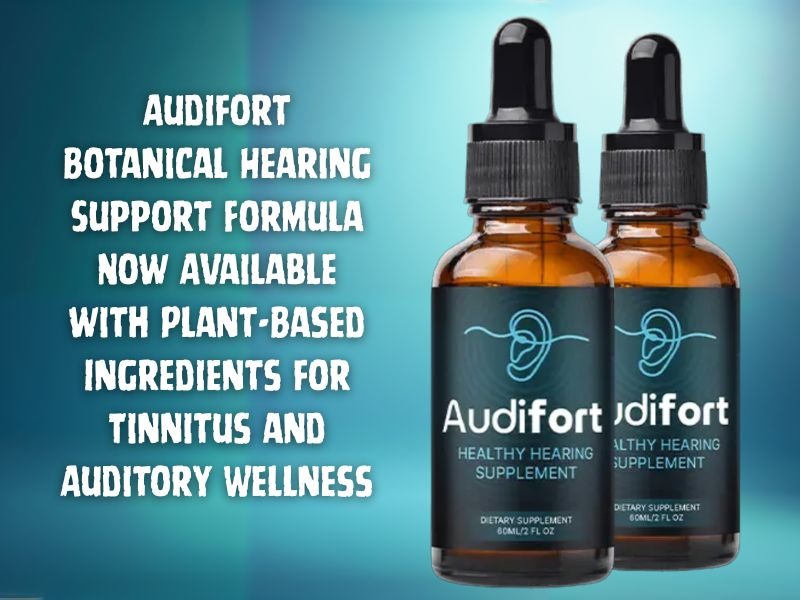
Audifort Research announced the commercial availability of an updated Audifort liquid drop supplement, described by the company as a "new and improved" formula featuring over 20 ingredients that the company positions for auditory wellness support in a general wellness context. The liquid drop formulation includes a mix of botanical extracts, amino acids, and nutrients included based on ingredient-level research discussions around antioxidant and general wellness contexts.
According to the company, the updated formula was informed by the company's review of ongoing research exploring relationships between oxidative stress, cellular health, and auditory function. While hearing loss and tinnitus have many potential causes — including noise exposure, age-related changes, and underlying health conditions — researchers continue to investigate whether nutritional factors may play a role in maintaining healthy auditory function over time.
View the current Audifort offer (official Audifort page)
Company materials indicate that the formulation strategy focused on combining ingredients studied across multiple wellness research areas, including circulation support, antioxidant activity, and neuroprotective mechanisms. The updated formula represents the company's approach to addressing multiple pathways researchers have explored in relation to auditory health, though the finished product has not undergone clinical trials as a complete formulation.
Research Context: Growing Interest in Nutritional Approaches to Hearing Health
Hearing health has become an area of expanding research interest as populations age and environmental noise exposure continues. According to the National Institute on Deafness and Other Communication Disorders, approximately 15% of American adults report some degree of hearing difficulty. While hearing aids and medical interventions remain the primary treatments for diagnosed hearing loss, researchers have begun exploring whether nutritional factors might influence cellular health in auditory tissues.
Recent research has examined several mechanisms that may affect hearing health over time. Oxidative stress in the inner ear has been studied as a potential contributor to age-related hearing changes, with some research exploring whether antioxidant compounds might support cellular health in cochlear tissues. Some published reviews have discussed antioxidant compounds in relation to oxidative stress mechanisms studied in auditory research contexts, though direct clinical evidence for finished consumer supplements remains limited.
Previous analyses of botanical formulations in hearing wellness contexts have explored ingredients like grape seed extract for antioxidant properties, green tea for circulation support, and capsicum for inflammatory response pathways, with ongoing investigations into how these compounds may relate to auditory function at the cellular level.
Tinnitus — the perception of sound without an external source — has been another area of research focus. Studies from institutions including Georgetown University Medical Center and the National Institute on Deafness and Other Communication Disorders have explored neuroplasticity mechanisms and how the brain processes auditory signals. While this research provides valuable context for understanding auditory health, dietary supplements like Audifort are not intended to treat, diagnose, or cure tinnitus or hearing loss.
The company states that Audifort was formulated with this broader research context in mind, though the product itself has not undergone clinical trials as a complete formulation. The ingredients were selected based on individual research profiles rather than studies of the finished product.
Botanical Ingredients and Individual Research Contexts
According to the company's website, Audifort contains more than 20 ingredients, with key components including botanical extracts, amino acids, and minerals. The formulation is delivered in liquid drop form, which the company states allows for flexible dosing. Each ingredient was selected based on specific research contexts, though individual ingredient research does not constitute evidence that the finished product will produce the same effects.
Maca Root (Lepidium meyenii)
Maca root is a Peruvian botanical traditionally used in herbal wellness practices. Research on maca has explored its potential effects on energy and vitality, with some studies investigating metabolic support properties. A study published in evidence-based complementary medicine examined subjective energy reports among participants using maca, though mechanisms remain under investigation.
According to the company, maca was included in Audifort as part of a broader wellness approach, though maca's specific role in hearing health has not been extensively studied. Its inclusion represents the formulation's focus on overall vitality support rather than targeted auditory claims.
Grape Seed Extract (Vitis vinifera)
Grape seed extract has been studied for its antioxidant properties in cellular health research, including investigations involving oxidative stress. Research published in journals including Free Radical Biology and Medicine has explored how oxidative damage may affect cellular structures throughout the body, with some animal studies investigating inner ear tissues specifically.
Research on antioxidant compounds continues to evolve, and evidence for finished consumer formulations remains limited. Earlier examinations of botanical wellness formulations have explored grape seed's antioxidant profile in the context of cellular protection mechanisms, with particular attention to how proanthocyanidins may relate to oxidative stress in various tissue types. A review of phytochemicals and neuroprotection by Kumar and Khanum noted that grape seed extract's antioxidant profile has been studied in various cellular health contexts, but specific applications to human hearing health require further research.
The company states that grape seed extract was included for its established antioxidant research profile, with the understanding that oxidative stress is one of many factors researchers are exploring in relation to age-related cellular changes. Individual responses to antioxidant supplementation vary, and protective effects cannot be guaranteed.
Green Tea Extract (Camellia sinensis)
Green tea extract contains catechins, particularly epigallocatechin gallate (EGCG), which have been studied for their antioxidant properties and potential circulation-related effects. Research on green tea has explored its relationship to vascular health and blood flow to various tissues.
Circulation to the inner ear is critical for delivering oxygen and nutrients to cochlear structures. Some preliminary research has investigated whether compounds studied in circulation contexts might have indirect relationships to auditory function, though direct evidence for green tea's effects on hearing health in humans remains limited. Studies on cerebral circulation have explored how certain plant compounds may influence blood flow patterns, though extrapolating these findings to inner ear circulation requires caution.
According to the company, green tea was selected for Audifort based on its established research profile in circulation and antioxidant activity, not specific evidence of hearing improvement. The ingredient represents one component of a multi-pathway approach to supporting overall wellness factors that research has explored in auditory health contexts.
Capsicum Annuum (Cayenne Pepper)
Capsicum annuum contains capsaicin, a compound studied for its potential effects on circulation and inflammatory response pathways. Research has explored capsaicin's relationship to healthy inflammatory processes, which some researchers have investigated in relation to various health conditions.
Inflammation in the inner ear has been studied as a potential factor in certain types of auditory changes, though the relationship is complex and not fully understood. The company states that capsicum was included in Audifort for its circulatory support properties and traditional use in herbal wellness formulations, rather than specific evidence linking it to hearing health outcomes.
Gymnema Sylvestre
Gymnema sylvestre is an herb traditionally used in Ayurvedic medicine, primarily studied for its potential effects on glucose metabolism. Research on gymnema has explored how it may influence insulin sensitivity and blood sugar regulation.
The connection between metabolic health and hearing health is an emerging area of research, with some studies investigating whether metabolic conditions might affect auditory function over time. However, gymnema's specific role in hearing support remains largely theoretical, based on broader metabolic wellness principles rather than direct auditory research.
According to the company, gymnema was included as part of a comprehensive metabolic support strategy, with the understanding that overall metabolic health may indirectly influence many body systems, though specific hearing benefits have not been clinically demonstrated.
Gamma-Aminobutyric Acid (GABA)
GABA is an amino acid that functions as a neurotransmitter in the nervous system, known for its role in regulating neural activity. Research on GABA has explored its potential relationship to stress response and nervous system balance.
Some research on tinnitus has explored neurological mechanisms and how neurotransmitter activity might relate to auditory perception, though GABA supplementation for tinnitus has not been proven effective in clinical trials. The National Institute on Deafness and Other Communication Disorders notes that tinnitus research is investigating various neural pathways, but definitive treatments remain elusive.
The company states that GABA was included in Audifort primarily for stress management support, as stress is one of many factors that some people with tinnitus report as affecting their experience. However, Audifort is not intended to treat or cure tinnitus, and individuals experiencing tinnitus should consult with healthcare professionals for proper evaluation and treatment.
Additional Botanical Components
According to the company's website, Audifort also contains California poppy, passion flower, hops extract, and various B vitamins, among other ingredients. Each was selected based on traditional use patterns and emerging research in related wellness areas.
B vitamins, for example, have been studied for their role in nervous system health and cellular energy production. A review by Kennedy published in Nutrients explored B vitamins and brain function, noting their involvement in various neurological processes. However, B vitamin supplementation for hearing health specifically has produced mixed results in research, and individual needs vary significantly based on baseline nutritional status.
The company emphasizes that the full ingredient list represents a multi-faceted approach to wellness rather than targeted treatment for any specific condition. The complete ingredient profile and formulation details are available on the company's official website.
Understanding the Limits of Nutritional Hearing Support
While Audifort and similar supplements represent growing interest in nutritional approaches to hearing health, it's critical to understand what dietary supplements can and cannot do in this context.
Hearing loss occurs through many mechanisms, including damage to hair cells in the cochlea, nerve pathway changes, structural changes in the ear, and age-related cellular decline. Once significant hearing loss has occurred, particularly damage to cochlear hair cells, current science indicates these structures do not regenerate in humans (though research continues in this area). A dietary supplement cannot reverse structural damage or restore hearing that has already been lost.
According to research published in Nature by White and colleagues, mammalian cochlear supporting cells can divide and trans-differentiate into hair cells under certain experimental conditions, but this represents early-stage research that has not translated into practical therapies. The company makes no claims that Audifort can regenerate hair cells or reverse existing hearing loss.
For individuals experiencing hearing loss, medical evaluation by an audiologist or otolaryngologist remains essential. Hearing aids, cochlear implants, and other medical devices are the evidence-based treatments for diagnosed hearing loss. Dietary supplements should be viewed as complementary approaches to supporting overall wellness, not replacements for medical care.
The company's positioning of Audifort focuses on supporting healthy auditory function in individuals seeking proactive nutritional approaches, not treating diagnosed conditions. This distinction is fundamental to understanding appropriate expectations for any hearing health supplement.
Consumer Interest in Hearing Support Supplements
Audifort enters a market where consumer interest in hearing-health support products has increased alongside broader preventive wellness trends, particularly among adults exploring nutrition-focused approaches for healthy aging. The hearing health supplement category has seen growth as aging populations seek ways to maintain sensory function and quality of life.
Consumer interest patterns suggest several demographic groups drive category exploration, including wellness-focused consumers who regularly use dietary supplements, adults with family histories of hearing changes, and individuals exposed to occupational or recreational noise. These patterns align with broader trends in preventive health and age-related wellness strategies.
However, the supplement category for hearing health remains less developed than categories like cardiovascular or joint health, where decades of research have established clearer connections between specific nutrients and health outcomes. Hearing health supplementation is still in relatively early stages, with more questions than answers about which ingredients, at what doses, might meaningfully support auditory function.
The company states that Audifort was formulated to address this gap by combining multiple ingredients with different mechanisms of action, creating a comprehensive formula that targets several pathways researchers believe may influence hearing health. This approach assumes that hearing health, like other aspects of wellness, may benefit from multi-faceted nutritional support rather than single-ingredient supplementation.
Company Background and Formulation Philosophy
According to company materials, Audifort Research developed the formula with the goal of creating a hearing health supplement that combined emerging research with practical accessibility. Company materials indicate that the development process involved reviewing botanical research, auditory health studies, and traditional herbal uses to identify ingredients worth including.
The company reports that Audifort is manufactured in the United States in facilities that follow Good Manufacturing Practices (GMP), though specific facility certifications are not detailed in available materials. The liquid drop format was chosen, according to the company, for ease of use and to allow flexible dosing compared to capsule formats.
The formulation is described as using "research-backed, all-natural ingredients combined in specific ratios," though the company has not published data on how these ratios were determined or whether the specific combination has been tested clinically. As with many dietary supplement formulations, the development appears to be based on ingredient research and traditional use patterns rather than clinical trials of the finished product.
The company emphasizes that Audifort is intended for individuals seeking to proactively support their hearing health through nutritional means, particularly those concerned about age-related changes, noise exposure, or general auditory wellness. The supplement is positioned as part of a broader hearing health strategy that should include protective measures like limiting noise exposure and regular hearing evaluations.
Direct-to-Consumer Distribution Model
According to the company, Audifort is available exclusively through the official website to ensure product authenticity and quality control. The direct-to-consumer model eliminates retail intermediaries, which the company states allows for direct customer support.
The website indicates that multiple purchase options are available, with specific pricing and package details listed on the site. Company materials state orders are generally processed within 24 working hours, with domestic delivery estimates of 5-10 days.
The company emphasizes that prospective users should purchase only from the official website to avoid counterfeit products, a concern in the supplement industry where unauthorized sellers sometimes market similar-sounding products or resell expired inventory.
Company materials reference a satisfaction policy, with full details outlined on the official website. Such policies relate to customer service terms and do not indicate product effectiveness. Individual experiences with dietary supplements vary significantly, and any purchase decisions should be made after careful consideration of personal health status and consultation with healthcare providers where appropriate.
Contact Information
For inquiries about Audifort's formulation, ingredients, or availability, according to the company's website, customer support can be reached at:
- Email: support@audifort.com
- Phone: +1-866-374-5018
- Hours: Monday-Sunday, 10 AM - 1 AM EST
View the current Audifort offer (official Audifort page)
Industry Context and Research Needs
Audifort's entry into the hearing health supplement market reflects broader trends toward nutritional approaches to age-related health maintenance. However, the field of hearing health supplementation would benefit from additional research to establish which ingredients, at what doses, might meaningfully support auditory function in humans.
Research on plant-based hearing support ingredients continues to evolve, though current research on hearing health and nutrition remains limited compared to more established supplement categories. Industry discussions around botanical wellness formulations have examined ingredients like maca root for adaptogenic support, GABA for neurological balance, and various antioxidant compounds for cellular health, though translating individual ingredient research to finished products requires careful consideration. While individual ingredients in formulas like Audifort have been studied in various contexts, few large-scale, long-term human studies have specifically examined whether nutritional supplementation can slow age-related hearing changes or reduce tinnitus severity.
The research that does exist often involves animal models, small sample sizes, or observational studies that can identify correlations but not prove causation. For example, while some studies have found that people with better nutritional status have slightly better hearing outcomes on average, this doesn't prove that supplementation will improve hearing in individuals with adequate nutrition.
Future research needs include randomized controlled trials of specific supplements for hearing health, studies examining optimal dosing and duration for various ingredients, research on which populations might benefit most from hearing health supplementation, and investigations into whether nutritional support can be protective in high-risk groups like those with significant noise exposure.
Until such research is available, hearing health supplements like Audifort represent informed hypotheses based on ingredient research rather than proven interventions. Consumers should approach them with appropriate expectations, understanding both the potential rationale and the evidence limitations.
Realistic Expectations and Individual Variation
The company notes that some customers report subjective changes over time, though individual experiences vary and no specific timeline can be guaranteed. Any perceived changes reported by users are subjective and may reflect individual variation rather than measurable changes in hearing function.
In reality, if nutritional supplementation influences hearing health at all, effects would likely be subtle and cumulative over extended periods rather than dramatic changes within days. The cellular structures and processes involved in hearing health change gradually, and any nutritional influence would similarly be gradual.
The company recommends consistent use for at least three to four months, which aligns with general supplement industry practices of encouraging longer-term use to assess benefits. However, longer use does not guarantee results, and individual responses vary based on numerous factors including baseline hearing health, age, noise exposure history, genetic factors, overall nutritional status, and consistency of use.
Regarding what constitutes a "result" with hearing supplements, this is inherently subjective. Unlike blood pressure or cholesterol, which can be objectively measured, subtle changes in hearing perception or auditory comfort are difficult for individuals to assess accurately without professional hearing tests. Self-reported improvements in hearing-related quality of life may reflect actual changes, placebo effects, or natural variation in how people perceive their hearing day to day.
Hearing Protection Remains Primary Prevention
Regardless of any dietary supplement, the safest and most reliable way to maintain hearing health is to protect ears from damage in the first place. Noise-induced hearing loss is largely preventable through consistent use of hearing protection in loud environments, limiting exposure to sustained loud sounds, and following occupational safety guidelines in noisy work settings.
The National Institute on Deafness and Other Communication Disorders recommends turning down the volume on personal audio devices, limiting time in loud environments, and using earplugs or earmuffs when exposure to loud noise is unavoidable. These protective measures have far stronger evidence for preventing hearing damage than any nutritional supplement.
For individuals already experiencing hearing changes or tinnitus, professional evaluation remains essential. Many treatable conditions can cause hearing symptoms, and early intervention often leads to better outcomes. A dietary supplement should never delay seeking appropriate medical care for hearing concerns.
Final Considerations
Audifort represents one company's approach to combining botanical ingredients into a formula intended to support hearing health through multiple mechanisms. The formulation draws on individual ingredient research in areas including antioxidant activity, circulation support, and neuroprotection, though the finished product has not undergone clinical trials.
For individuals considering Audifort or similar supplements, key considerations include understanding that supplements cannot treat, cure, or reverse diagnosed hearing conditions; recognizing that hearing protection and medical care remain primary approaches to hearing health; setting realistic expectations about gradual, subtle effects rather than dramatic improvements; discussing supplement use with healthcare providers, especially when taking medications; and viewing supplementation as one component of overall hearing health strategy rather than a standalone solution.
Company materials reference a satisfaction policy, with terms available on the official website. As with any dietary supplement decision, careful consideration of personal health status, expectations, and alternative approaches is warranted before beginning any new supplementation regimen.
Disclaimers
FDA Health Disclaimer: These statements have not been evaluated by the Food and Drug Administration. This product is not intended to diagnose, treat, cure, or prevent any disease, including hearing loss or tinnitus. Always consult your physician before starting any new supplement, especially if you have existing hearing conditions, take medications, or are under medical care for auditory health.
Professional Medical Disclaimer: This article is educational and does not constitute medical advice. Audifort is a dietary supplement, not a hearing aid, medical device, or pharmaceutical treatment. If you are experiencing hearing loss, tinnitus, or other auditory symptoms, consult a qualified audiologist or healthcare provider for proper diagnosis and treatment. Do not delay seeking professional medical care based on information about dietary supplements.
Hearing Health Notice: Hearing loss and tinnitus have many potential causes, including noise exposure, age-related changes, infections, medications, and underlying health conditions. A dietary supplement cannot replace medical evaluation or treatment for diagnosed hearing conditions. Protective measures (limiting noise exposure, using hearing protection) remain the primary methods for preserving hearing health.
Results May Vary: Individual results will vary based on factors including age, baseline hearing health, noise exposure history, genetic factors, consistency of use, overall health status, and whether hearing loss is present. While some customers report subjective improvements, results are not guaranteed and the product has not been clinically studied as a complete formulation.
FTC Affiliate Disclosure: This article contains affiliate links. If you purchase through these links, a commission may be earned at no additional cost to you. This compensation does not influence the accuracy, neutrality, or integrity of the information presented. All opinions and descriptions are based on published research and publicly available information.
Pricing Disclaimer: All pricing and promotional details mentioned were accurate at the time of publication (December 2025) but are subject to change without notice. Always verify current pricing, availability, and terms on the official Audifort website before making any purchase decisions.
Publisher Responsibility: The publisher of this article has made every effort to ensure accuracy at the time of publication. We do not accept responsibility for errors, omissions, or outcomes resulting from the use of the information provided. Readers are encouraged to verify all details directly with the company and their healthcare provider before making decisions about hearing health supplements.
Research Attribution: References to research studies on individual ingredients do not constitute evidence that Audifort as a finished product will produce the same effects. Ingredient-level research is provided for educational context only. Audifort has not undergone clinical trials as a complete formulation.

Email: support@audifort.com
Phone: +1-866-374-5018
Hours: Monday-Sunday, 10 AM - 1 AM EST

Legal Disclaimer:
EIN Presswire provides this news content "as is" without warranty of any kind. We do not accept any responsibility or liability for the accuracy, content, images, videos, licenses, completeness, legality, or reliability of the information contained in this article. If you have any complaints or copyright issues related to this article, kindly contact the author above.
